- Sep 29, 2025
Four Prosocial Skills ALL Kids Need
- Wendy Young, LMSW, BCD
- friendship, social skills , parenting, feelings, child therapist, coping skills, school counseling
Every parent, teacher, and therapist knows that raising kids who are not only smart but also kind, helpful, and cooperative is one of the greatest goals of childhood. These traits fall under the umbrella of prosocial skills, the abilities that help children connect with others, resolve conflicts, show empathy, and contribute positively to their communities.
Why Prosocial Skills Are So Important
Prosocial skills are the building blocks of healthy relationships. Here are FOUR PROSOCIAL SKILLS that help children:
Form friendships by learning how to share, take turns, and cooperate.
Build empathy by noticing others’ feelings and respond in supportive ways.
Handle conflict constructively instead of resorting to aggression or withdrawal.
Develop resilience because kids who can reach out for support and collaborate tend to cope better with stress and setbacks.
Without these skills, kids may struggle to navigate both the playground and the classroom. Research consistently shows that strong social-emotional skills early in life are linked to better mental health, academic success, and even long-term well-being.
How Kids Learn Them Best
Children don’t just absorb prosocial skills automatically—they need opportunities to see, practice, and reinforce them. Role-play, games, and interactive activities are powerful tools because they:
Make abstract concepts like “empathy” or “respect” more concrete.
Provide safe space for mistakes, reflection, and do-overs.
Engage kids’ natural sense of fun and imagination, which keeps them motivated.
A Fun Seasonal Tie-In
If you're looking for a fun, seasonal twist on helping kids gain these critical skills, check out “Helping Kids Say BOO to Bad Habits.” In this interactive game-like activity, children listen to 50 different habits, some healthy and prosocial, some not-so-great, and get to weigh in. They cheer on the helpful ones and say “BOO!” to the tricky ones. It’s a lighthearted, seasonal approach that sparks meaningful conversations while reinforcing the behaviors we want kids to grow into.
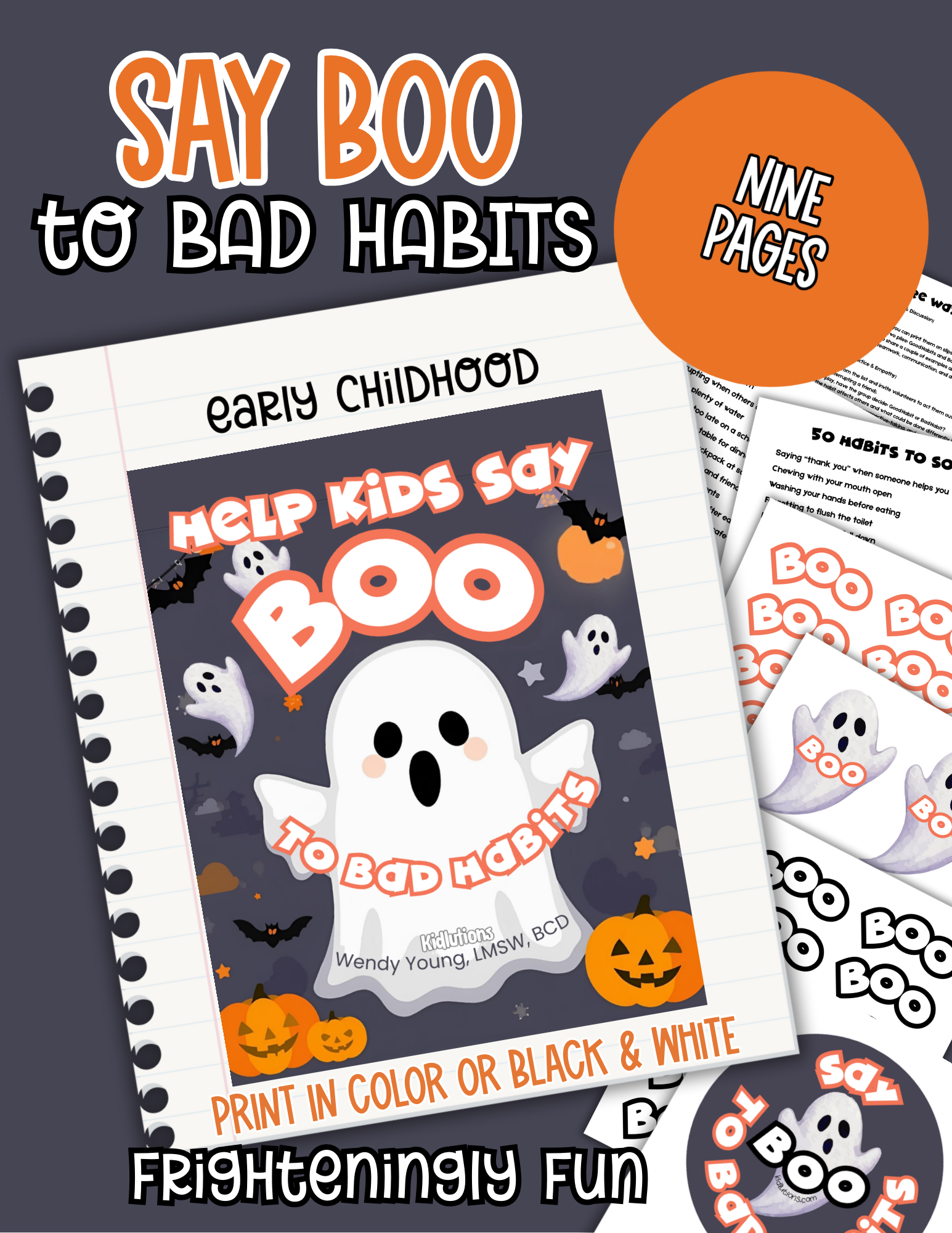
It's 25% off now! If the discount doesn't automatically populate, use code: HALLOW25.
Prosocial skills may be some of the most important lessons kids learn, and when you package them with play, laughter, and a little pumpkin-season magic, those lessons are far more likely to stick.
Until next time,

Wendy Young, LMSW, BCD, is the founder of Kidlutions and co-author of BLOOM: 50 Things to Say, Think and Do with Anxious, Angry and Over-the-Top Kids, co-creator of BLOOM Brainsmarts, and creator of The Joyful Parent. She is the author of numerous workbooks and resources to help from the preschool through the teen years.
Follow her on Pinterest, Instagram, Twitter and Facebook. Affiliate links may be used in this post.
References
Denham, S. A., Bassett, H. H., & Zinsser, K. M. (2020). Early childhood teachers as socializers of young children’s emotional competence. Early Childhood Education Journal, 48(5), 485–496. https://doi.org/10.1007/s10643-020-01035-6
Eisenberg, N., Spinrad, T. L., & Valiente, C. (2023). Prosocial development in childhood and adolescence: Advances and new directions. Developmental Psychology, 59(3), 449–462. https://doi.org/10.1037/dev0001496
Malti, T., & Peplak, J. (2020). Prosocial development in childhood and adolescence. In M. H. Bornstein (Ed.), Handbook of child psychology and developmental science (pp. 1–47). Wiley. https://doi.org/10.1002/9781119171492.wecp042
Zhang, X., & Chen, H. (2021). The role of empathy in children’s prosocial behavior: Evidence from cross-cultural research. Child Development Perspectives, 15(3), 164–170. https://doi.org/10.1111/cdep.12407