- Feb 18
Random Acts of Kindness Day
- Wendy Young, LMSW, BCD
- parenting, feelings, school counseling, early childhood education, kindness
- 0 comments
Why Random Acts of Kindness Matter
Kindness is more than just good manners — it’s a powerful social and emotional experience that helps people feel safe, connected, and valued. When children practice kindness, they aren’t just helping others. They are building empathy, emotional awareness, and a sense of belonging.
Even small acts of kindness can:
✔ Reduce stress and improve mood
✔ Strengthen friendships and social connection
✔ Build empathy and perspective-taking
✔ Support healthy emotional development
✔ Create a ripple effect of positive behavior
Research consistently shows that prosocial behavior — helping, sharing, and caring — is linked to greater well-being for both the person giving kindness and the person receiving it.
That makes kindness one of the simplest and most powerful tools we can teach children.
What Is Random Acts of Kindness Day?
Random Acts of Kindness Day is celebrated each year on February 17th, encouraging people of all ages to spread kindness in simple, unexpected ways.
The goal isn’t perfection.
It’s awareness.
It’s noticing opportunities to care, help, encourage, and include others in everyday life.
For children, this is a wonderful opportunity to practice empathy in action.
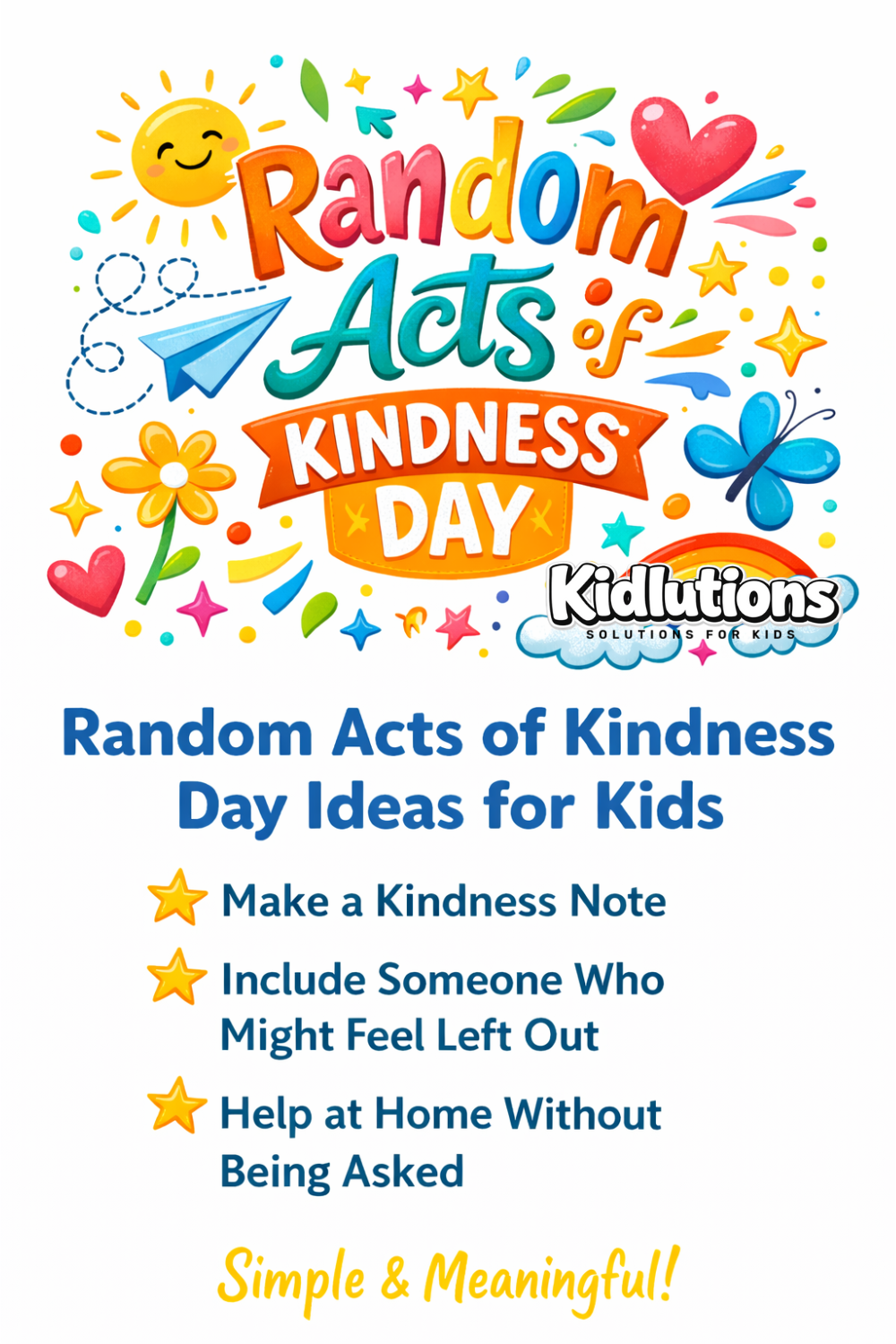
3 Easy Things Kids Can Do on Random Acts of Kindness Day
These ideas are simple, meaningful, and developmentally appropriate for most children.
1. Make a Kindness Note or Drawing
Kids can create a short message, card, or drawing for someone who might need encouragement.
Ideas:
A note for a teacher
A drawing for a neighbor
A message for a sibling or grandparent
A thank-you note for a helper in the community
This helps children practice appreciation and emotional expression.
2. Include Someone Who Might Feel Left Out
One of the most powerful forms of kindness is inclusion.
Kids can:
Invite someone to play at recess
Sit with someone new at lunch
Ask a classmate to join a game
Help a younger child
Inclusion teaches empathy, social awareness, and courage.
3. Help at Home Without Being Asked
Kindness starts in everyday relationships.
Encourage kids to:
Put away toys or dishes
Help a sibling clean up
Feed a pet
Do a small chore for someone else
Helping builds responsibility and reinforces that kindness is something we do, not just something we talk about.
Helping Kids Understand Why Kindness Matters
Children learn best when kindness is modeled, noticed, and named.
You can support kindness development by:
✔ Talking about how kindness makes people feel
✔ Praising effort, not perfection
✔ Modeling patience and empathy
✔ Reflecting together after a kind act
✔ Making kindness part of daily family culture
When kids understand that their actions affect others, they begin to see themselves as capable helpers and caring community members.
That sense of agency is powerful.
The Ripple Effect of Kindness
Kindness doesn’t stay contained in one moment.
It spreads.
A child who feels included is more likely to include others.
A child who receives encouragement is more likely to offer it.
A child who experiences warmth learns how to create it.
Small actions shape emotional climates — in classrooms, families, and communities.
A Simple Kindness Challenge
Today, invite your child to do one intentional kind act and notice what happens.
Ask:
How did it feel?
How did the other person respond?
What might they do next because of that kindness?
These conversations help children connect behavior to emotional impact — the heart of social-emotional learning.
Character Companion
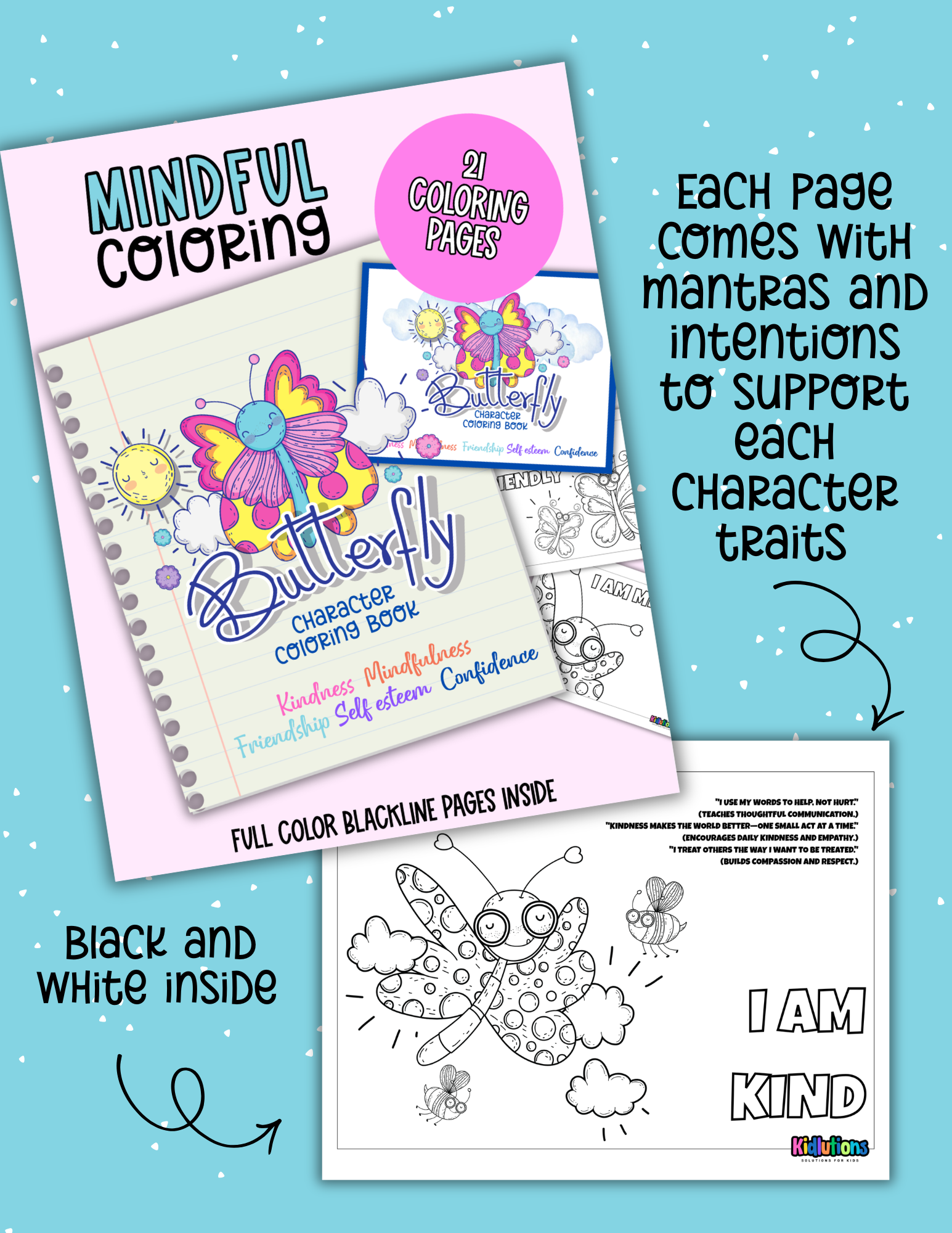
Need more inspiration and support for developing character traits? Check out our sweet resource that gives you 21 pages of butterfly-themed coloring sheets. Each sheet comes with mantras and intentions that support developing skills, and allow you to drill down to important elements of the skill! This set will be lovely to have on hand for spring and makes a colorful "banner bunting" when strung together!
Get the full bundle of coloring pages for just $2.99. Special ends Thursday, February 19th at 10 pm EST. The discount is already applied, but if you have troubles, USE CODE: KINDNESS at checkout!
Final Thought
Kindness doesn’t have to be big to matter.
A smile.
An invitation.
A helping hand.
These small moments tell children — and the world — that people matter.
And that is never random in its impact.
References
Cash, T. A., Aknin, L. B., & Girme, Y. U. (2024). Everyday acts of kindness predict greater well-being during the transition to university. Social and Personality Psychology Compass. https://doi.org/10.1111/spc3.12972
Hui, B. P. H. (2022). Prosocial behavior and well-being: Shifting from the “what” to the “how.” Current Opinion in Psychology, 44, 107–112. https://doi.org/10.1016/j.copsyc.2021.08.015
Kakulte, A. (2023). Prosocial behavior, psychological well-being, and positive and negative affect among adults. Journal of Mental Health and Human Behaviour.
Linwei, L., Khan, A., & Rameli, M. R. (2023). Do prosocial behaviors always increase well-being? A meta-analysis on the impact of prosocial behavior on well-being. International Journal of Academic Research in Progressive Education and Development, 12(4). https://doi.org/10.6007/IJARPED/v12-i4/19720
Liu, N., et al. (2024). Trait mindfulness and prosocial behavior: The mediating role of psychological capital and moderating role of moral identity. Frontiers in Psychology. https://doi.org/10.3389/fpsyg.2024.1431861
Naclerio, M., et al. (2026). Exploring the effects of prosocial and self-kindness interventions on well-being: A community study.
Palacios-Delgado, J., et al. (2025). The effectiveness of kindness interventions for promoting happiness and reducing depressive symptoms in adults. Social Sciences, 14(2), 61. https://doi.org/10.3390/socsci14020061
van de Groep, S., et al. (2025). Online prosocial behaviors in adolescence and young adulthood: Associations with offline helping and social functioning. Computers in Human Behavior Reports.
Harvard T.H. Chan School of Public Health. (2023). The positive health effects of prosocial behaviors. https://hsph.harvard.edu
Social Connection Guidelines Advisory Group. (2024). What are the benefits of prosocial behaviour? Evidence brief. https://www.socialconnectionguidelines.org
Until next time,

Wendy Young, LMSW, BCD, is the founder of Kidlutions and co-author of BLOOM: 50 Things to Say, Think and Do with Anxious, Angry and Over-the-Top Kids, co-creator of BLOOM Brainsmarts, and creator of The Joyful Parent. She is the author of numerous workbooks and resources to help from the preschool through the teen years.
Follow her on Pinterest, Instagram, Twitter and Facebook. Affiliate links may be used in this post.