- Apr 7
Feelings First: Why Feelings Check-ins Matter
Why Helping Kids Check In With Their Feelings Changes Everything
If you’ve ever thought,
“Why does this small thing turn into such a big reaction," you are not alone!
What looks like “overreacting” in kids is often unprocessed emotion with nowhere to go. And here’s the good news, when we teach kids to check in with their feelings, we’re not just helping them give meaning to what is happening inside and calming the moment, we’re literally helping build the brain systems that make regulation possible.
This is why it is always worth the time it takes to slow down and address feelings.
Feelings Come Before Behavior (Always)
Here's something we need to keep top of mind: Children don’t “choose” dysregulation. They aren't choosing to disrupt the day, aren't manipulating us and aren't trying to throw a wrench in whatever activity is going on.
Research over the past few years continues to confirm that emotion regulation is foundational to behavior, learning, and social success.
Before a child can:
follow directions
solve problems
use coping skills
…they need to recognize what they’re feeling. And they need our help.
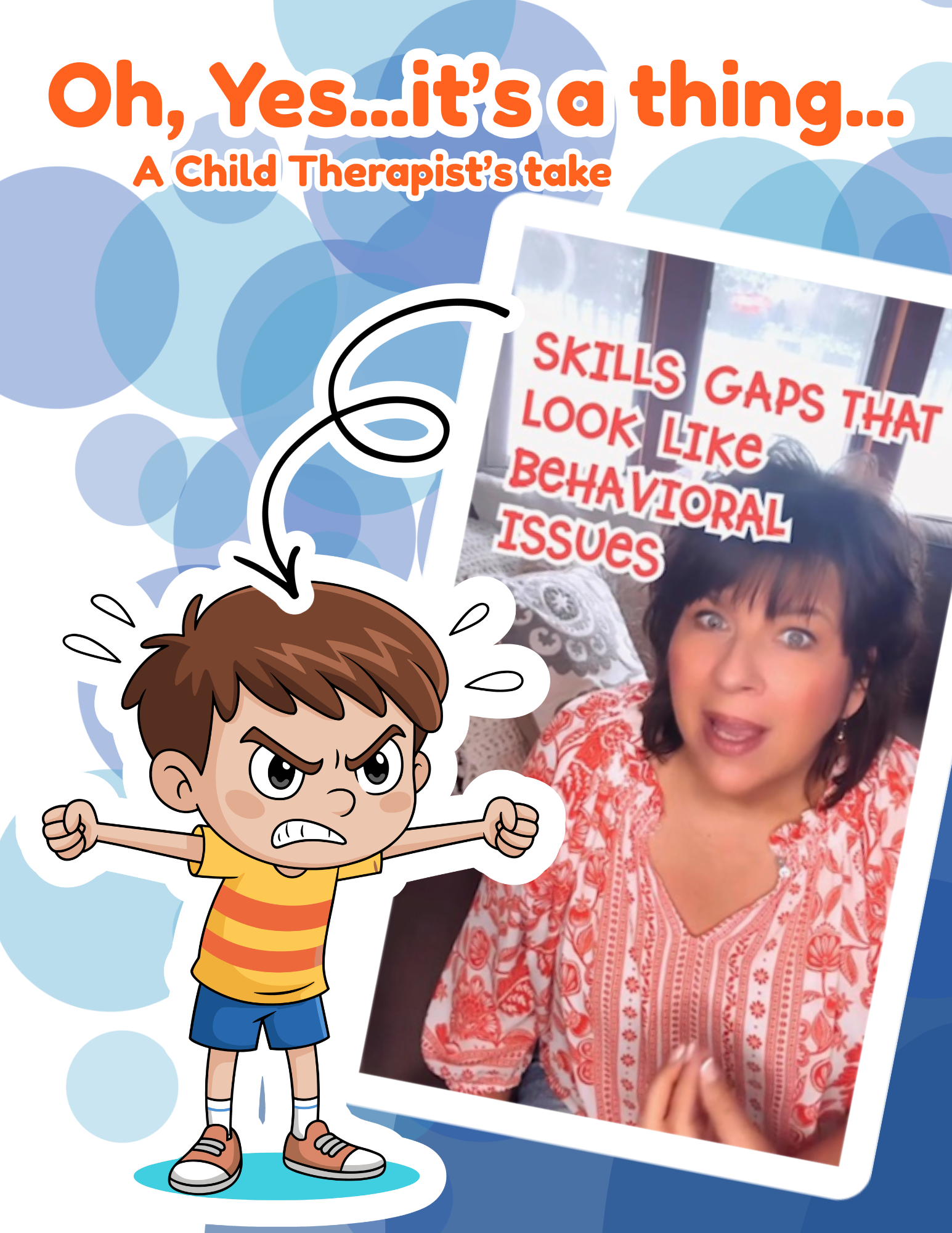
I recently did a reel about this very issue on Instagram. Click image to see it all:
Without that awareness, behavior becomes communication.
Tantrums.
Shutdown.
Avoidance.
Aggression.
These behaviors give us insights into a nervous system that is overwhelmed and under-resourced.
Why “Checking In” Is a Game-Changer
A feelings check-in does something powerful:
It slows the moment down and brings the child’s attention inward.
This approach builds emotional competence, which includes:
recognizing emotions
naming them
understanding them
managing them
And emotional competence is strongly linked to better social adjustment, mental health, and resilience.
Even more compelling…
Recent and historical research shows that children with stronger emotion regulation skills demonstrate better school adjustment, including social skills and academic performance.
So, for what may seem like an oversimplified approach, it's tried and true. It's about the most bang for your buck you can get when wanting to invest in activities that support growth, development, social skills, learning and better behavior.
This isn't just a "feelings free-for-all" and it isn't "soft". It's about learning, relationships, and long-term well-being.
And it deserves it's place at the table. At the head of the table, if you ask me!
The Brain Science (Made Simple)
When kids are overwhelmed, the emotional center of the brain (the limbic system) takes over.
Thinking shuts down.
Logic disappears.
Listening? Gone.
But when we guide a child to pause and notice their feelings, we are helping:
activate the prefrontal cortex (thinking brain)
build neural pathways for regulation
create space between feeling and action
Over time, this becomes a skill, not just a moment. And it's definitely not coddling (as I've heard naysayers lament).
Why Kids Don’t Automatically Know Their Feelings
Emotion awareness is learned, not automatic.
Children need:
language (“I feel frustrated”)
modeling (watching adults name feelings)
repetition (lots of it)
support during dysregulation
Research also highlights that relationships, especially supportive adults, play a critical role in developing emotion regulation.
This is where you come in.
What a Feelings Check-In Actually Teaches
When you consistently use a feelings check-in, kids learn:
✔ “Feelings are safe to notice”
✔ “I can name what’s happening inside me”
✔ “I don’t have to act on every feeling”
✔ “There are ways to move through hard emotions”
And maybe most importantly…
✔ “Someone understands me.
That last one is everything. You've probably experienced it yourself at some point, when you felt like someone really "got" you and understood just where you were coming from. There's really nothing like it!
Simple Ways to Start Doing Feelings Check-ins (That Actually Work)
You don’t need anything complicated.
Start here:
1. Pause the moment
“Let’s check in… what are you feeling right now?”
2. Offer choices
“Are you feeling mad, frustrated, or something else?”
3. Normalize
“That makes sense. I would feel that way too.”
4. Then guide
“What could help your body right now?”
Notice the order:
👉 Awareness → Validation → Strategy
Not the other way around.
Why This Matters More Than Ever
Kids today are navigating:
faster-paced environments
more stimulation
higher emotional demands
And research continues to show that emotion regulation is directly tied to well-being, life satisfaction, and reduced negative affect in children.
Let me reiterate, this is not a “soft skill.” It’s a life skill.
It's Not About Stopping the Meltdown
When a child melts down, it’s easy to focus on stopping the behavior.
But what if we saw it differently?
What if every meltdown was actually:
👉 a moment to build awareness
👉 a chance to teach regulation
👉 an opportunity to connect
Because when kids learn to check in with their feelings…they grow in their understanding of themselves, and that insight is the first building block to managing said feelings!
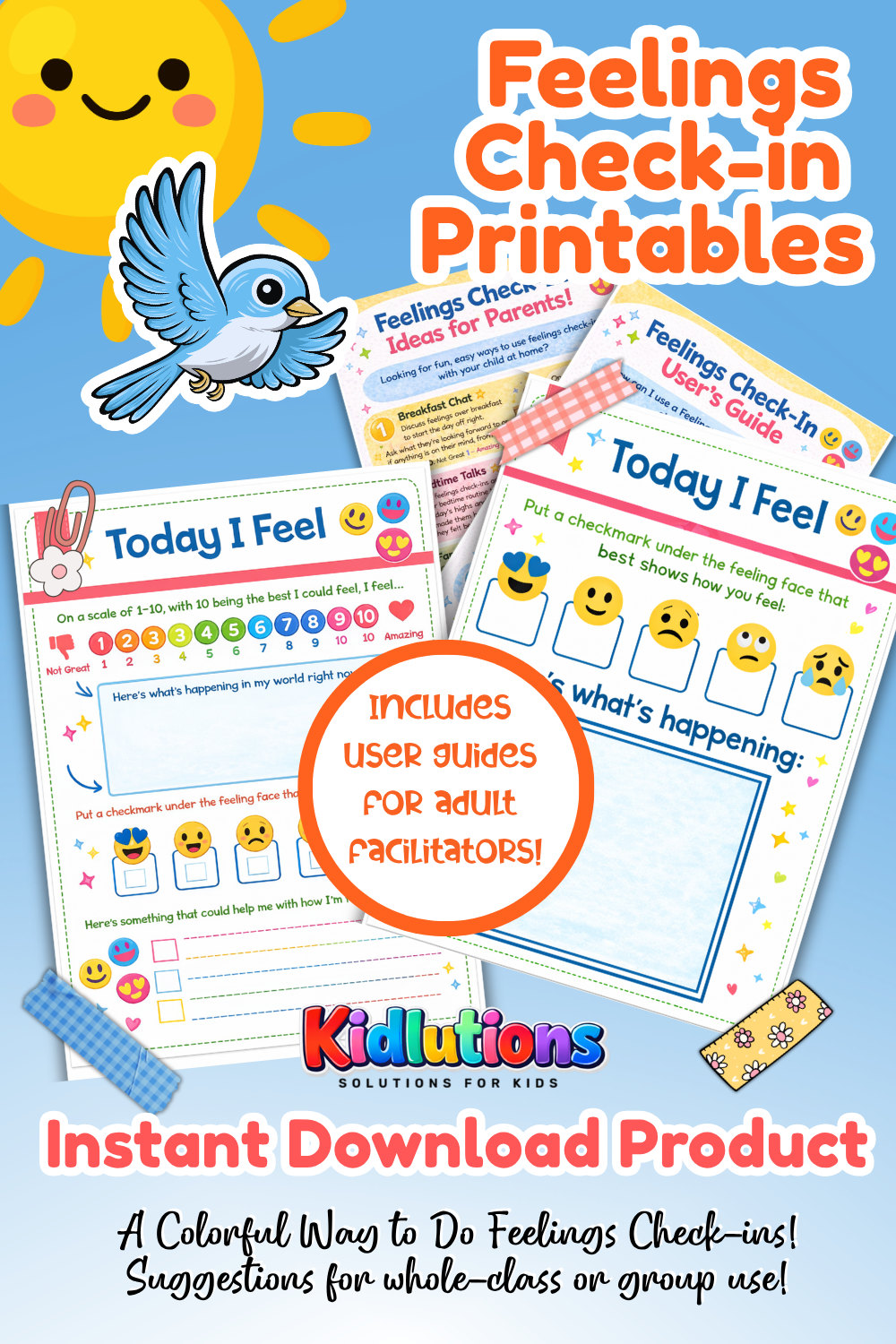
🌿 Introducing the “Feelings Check-In” Resource
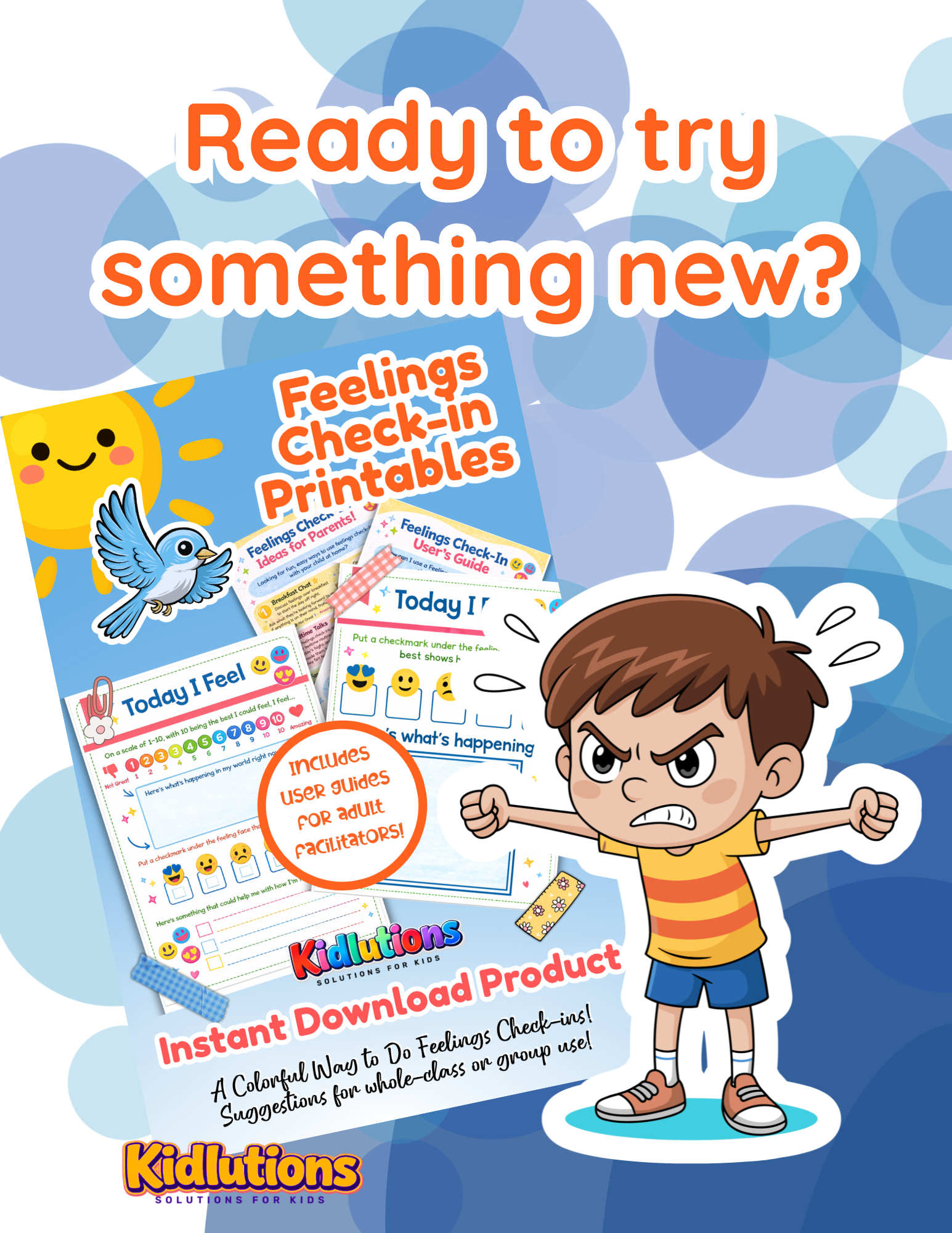
Go HERE to find it all or click image above!
{Almost all of our resources are HALF OFF when they first launch!
Grab one of our freebies and sign-up our newsletter to get early notification of freebies and sales!}
More...
If you’re ready to make this easier (and more consistent), I created a Feelings Check-In resource designed specifically for kids.
It helps children:
identify emotions visually
build feeling vocabulary
practice daily emotional awareness
connect feelings to coping strategies
Perfect for:
✔ home
✔ classrooms
✔ therapy sessions
Use it as a daily ritual, a calm-down tool, or a starting point for deeper conversations.
It comes with two different guides for adult facilitators, which include 10 ways to enhance and extend the learning!
References
Adynski, H. (2024). The role of emotional regulation on early child school adjustment. Journal of Pediatric Nursing.
Aghaziarati, A., & Nejatifar, S. (2023). Emotional development and regulation in children: A review of recent advances. KMAN Counseling & Psychology Nexus, 1(1), 118–125.
Somerville, M. P., et al. (2024). Supporting children’s emotion regulation and well-being in schools. Child Indicators Research.
Peet, S. L., et al. (2025). Parents’ emotion regulation and emotion socialization in early childhood. Early Child Development and Care.
Kim, B. R., et al. (2024). Predicting emotion regulation in toddlers: A longitudinal study. International Journal of Behavioral Development.
Until next time,

Wendy Young, LMSW, BCD, is the founder of Kidlutions and co-author of BLOOM: 50 Things to Say, Think and Do with Anxious, Angry and Over-the-Top Kids, co-creator of BLOOM Brainsmarts, and creator of The Joyful Parent. She is the author of numerous workbooks and resources to help from the preschool through the teen years.
Follow her on Pinterest, Instagram, Twitter and Facebook. Affiliate links may be used in this post.